
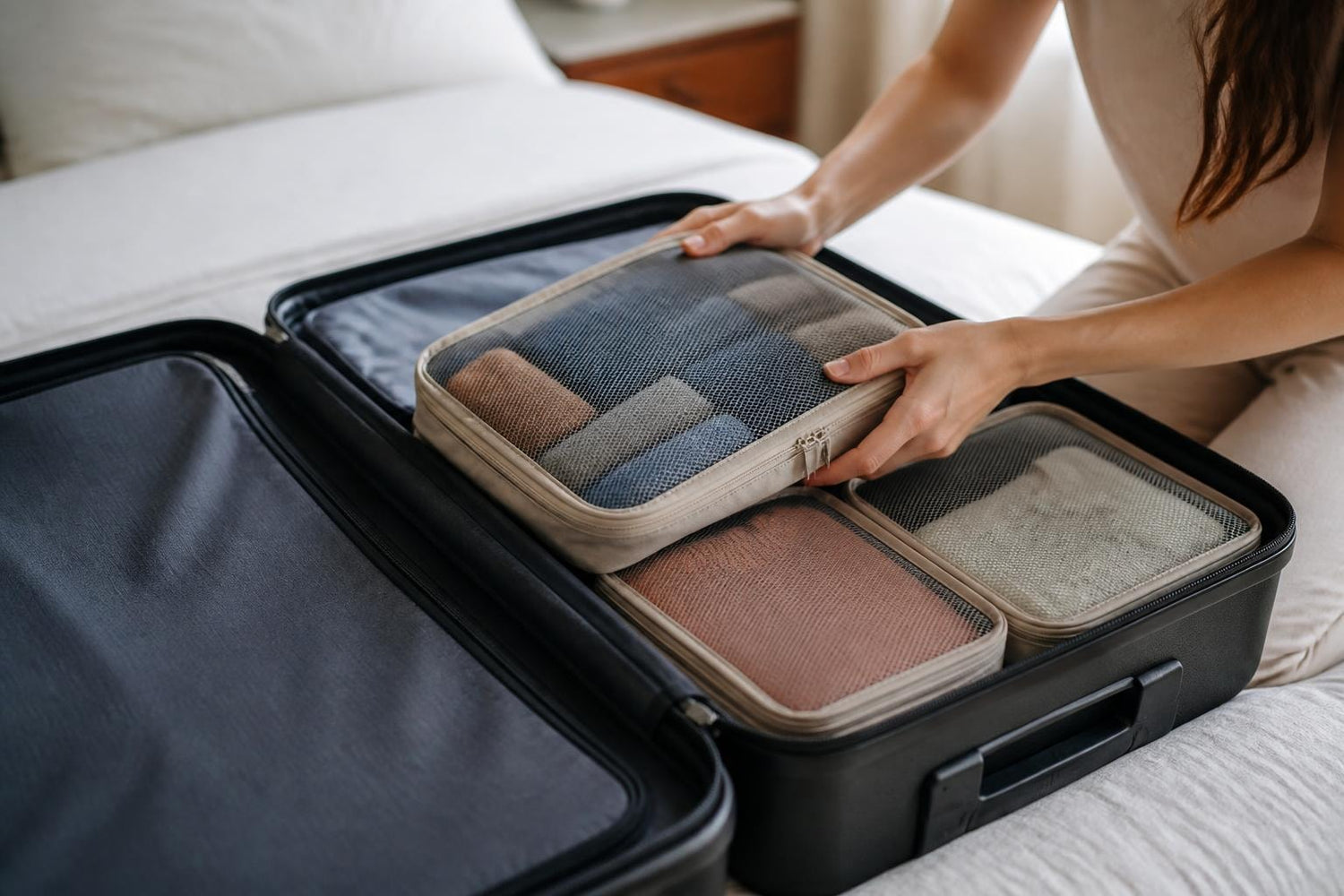
Travellers searching for ways to fit more into their suitcase often turn to packing cubes, but the question remains: do packing cubes save space, or are they simply another travel accessory taking up valuable room? The answer isn't straightforward. While packing cubes won't magically create extra space, they do help you pack more efficiently by compressing soft items and eliminating air pockets. Understanding when they work and when they don't makes the difference between arriving with everything you need or struggling to close your bag.
How Packing Cubes Affect Luggage Space
The physics behind packing cubes is simpler than most people think. When you fold clothes loosely in a suitcase, air pockets form between layers and around edges. These gaps waste considerable space. Packing cubes work by creating contained compartments that compress soft fabrics, reducing the volume items occupy.
Standard packing cubes provide light compression through their zippered design. As you close the zip, the cube applies gentle pressure to the contents, squeezing out some air. This doesn't work equally well for all items. Soft, compressible fabrics like t-shirts, underwear, and light jumpers respond best to this method.
Compression packing cubes feature an additional compression zip that further reduces volume. This two-zip system can reduce packed volume by up to 30-60% for compressible items. They're particularly useful for bulky items like down jackets, but don't work as well on structured coats.
What Actually Compresses Well
Item Type |
Compression Potential |
Best Container |
|---|---|---|
Cotton t-shirts |
High (30-40%) |
Compression cube |
Underwear and socks |
High (35-45%) |
Standard cube |
Light jumpers |
Medium (20-30%) |
Compression cube |
Jeans and denim |
Low (5-10%) |
Standard cube |
Formal shirts |
Very low |
Garment folder |
Structured jackets |
None |
Worn or carried |
The table shows why the space-saving benefit of packing cubes depends entirely on what you're packing. Bulky items with structure don't compress well, regardless of the cubes you use.
The Science Behind Efficient Packing
Research into packing optimisation shows that saving space isn't just about compression. It's also about reducing the empty gaps between items. Studies on packing problems have found that uniform, rectangular shapes fit together more efficiently than irregular shapes.
The same idea applies to your suitcase. Loose clothes tend to bunch, fold, and sit unevenly, leaving awkward gaps between items.
Packing cubes help by turning soft, irregular piles of clothing into neater, more stackable sections. They won't change the size of your suitcase, but they can help you use the space inside it more efficiently.
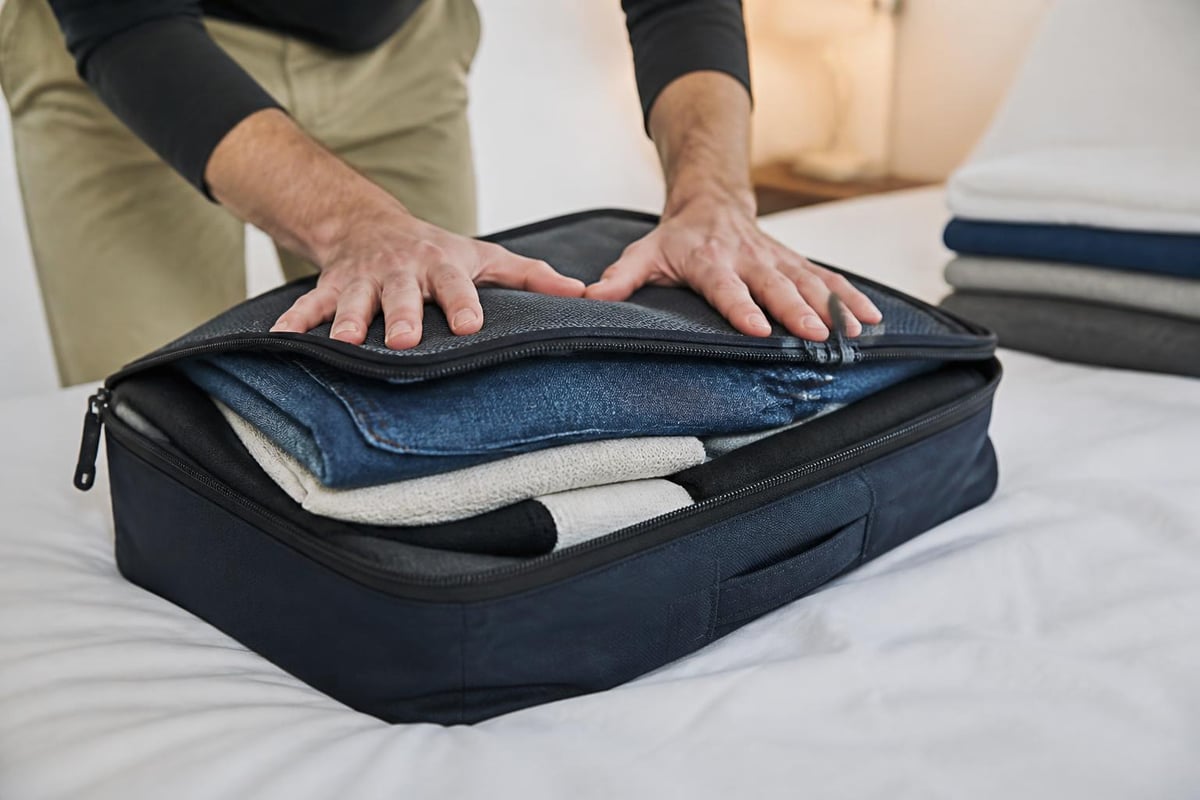
Three ways packing cubes improve space efficiency:
They force you to fold items neatly rather than stuffing them randomly
They create stackable shapes that fit together and reduce gaps
Compression cubes removes air pockets between fabric layers
The organisation side matters too. When professional organisers explain how to use packing cubes, they focus less on "cramming more in" and more on creating a simple system. A suitcase that's neatly packed is usually easier to close, easier to unpack, and better at using the space you already have.
When Packing Cubes Don't Save Space
Packing cubes can help you pack more efficiently, but they don't work in every situation. In some cases, they can actually take up extra room.
First, the cube itself adds a small amount of bulk. Most packing cubes are made from lightweight fabric, but the material still adds weight and takes up space around your clothes. For a short trip with only a few items, that extra layer may not be worth it.
Second, packing cubes are less useful for bulky or rigid items. Shoes, toiletry bags, electronics, and books already have a fixed shape, so putting them inside a cube usually just adds more material around them without saving much space.
Third, overfilling a cube can make it less effective. If you stuff too much inside, the cube can become lumpy and harder to fit neatly in your suitcase. Compression packing cubes work best when they're filled firmly, but not forced shut, so the compression zip can flatten the contents properly.
Common Mistakes That Waste Space
Using too many cubes for too few items
Packing hard items that don't compress
Mixing compressible and non-compressible items in one cube
Buying cubes that don't fit your suitcase dimensions
Failing to compress cubes fully before closing the suitcase
Most travellers make at least one of these errors initially. According to travel experts reviewing packing cubes, the learning curve involves understanding which items benefit from cubes and which don't.
Comparing Packing Methods for Space Efficiency
Do packing cubes save space compared to other packing methods? Testing different approaches reveals surprising results.
Packing Method |
Space Used |
Organization |
Wrinkle Risk |
|---|---|---|---|
Loose folding |
100% (baseline) |
Poor |
High |
Rolling clothes |
85-90% |
Medium |
Medium |
Standard packing cubes |
80-85% |
High |
Medium |
Compression cubes |
65-75% |
High |
Medium-High |
Vacuum bags |
50-60% |
Low |
High |
Rolling clothes is another common space-saving method. It can help reduce bulk and makes it easier to tuck clothes around the edges of your suitcase. But rolling on its own doesn't give you the same level of organisation as packing cubes, and it won't compress your clothes as much as compression cubes. For many travellers, the best approach is a mix of both: roll softer items like t-shirts, activewear, and underwear, then place them inside packing cubes to keep everything neat and contained.
Vacuum compression bags save the most space, especially for bulky clothes or longer trips. They can be less convenient if you need to repack often, as some styles require a vacuum or pump to reseal. For that reason, they're best for items you don't need to access daily, while packing cubes are better for everyday organisation.
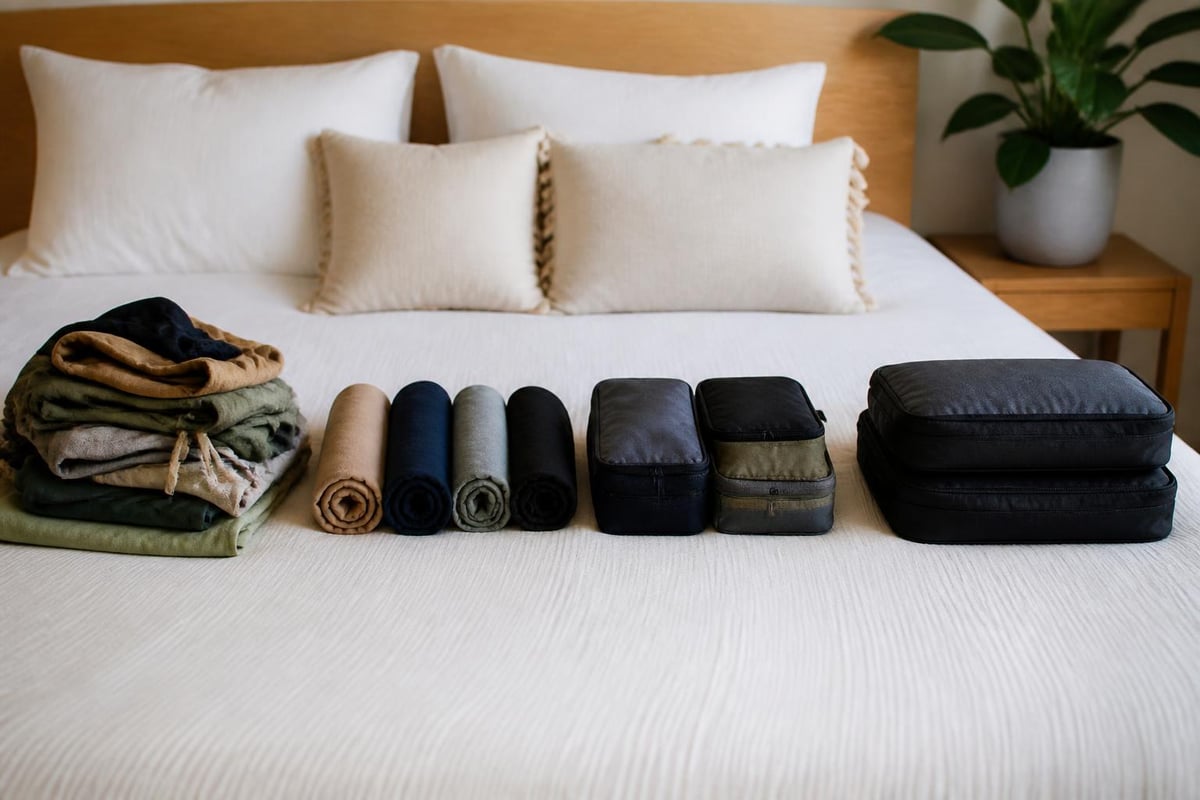
Choosing the Right Packing Cube System
The right choice depends on your travel style, suitcase size, and typical clothing needs.
Standard packing cubes are a good choice for short trips, business travel, and clothing you don't want overly compressed. They keep everything organised without flattening more delicate fabrics too much.
Compression cubes are better for longer trips, backpacking, or packing bulkier items like hoodies, jumpers, and activewear. The extra zip helps reduce bulk, which can make a noticeable difference when you're packing for a week or more.
Hybrid sets include various cube sizes and compression levels. You can use smaller cubes for underwear and socks, medium cubes for tops, and larger compression cubes for bulkier clothing.
Size is worth paying attention to as well. Packing cubes work best when they fit neatly inside your suitcase. If they leave big gaps around the edges, you can lose some of the space you were trying to save
At Simplify Living, we design our packing cube sets with standard suitcase dimensions in mind, so they fit neatly without wasting unnecessary space.
Practical Packing Strategies With Cubes
Knowing whether packing cubes save space is one thing. Using them properly is what makes the difference.
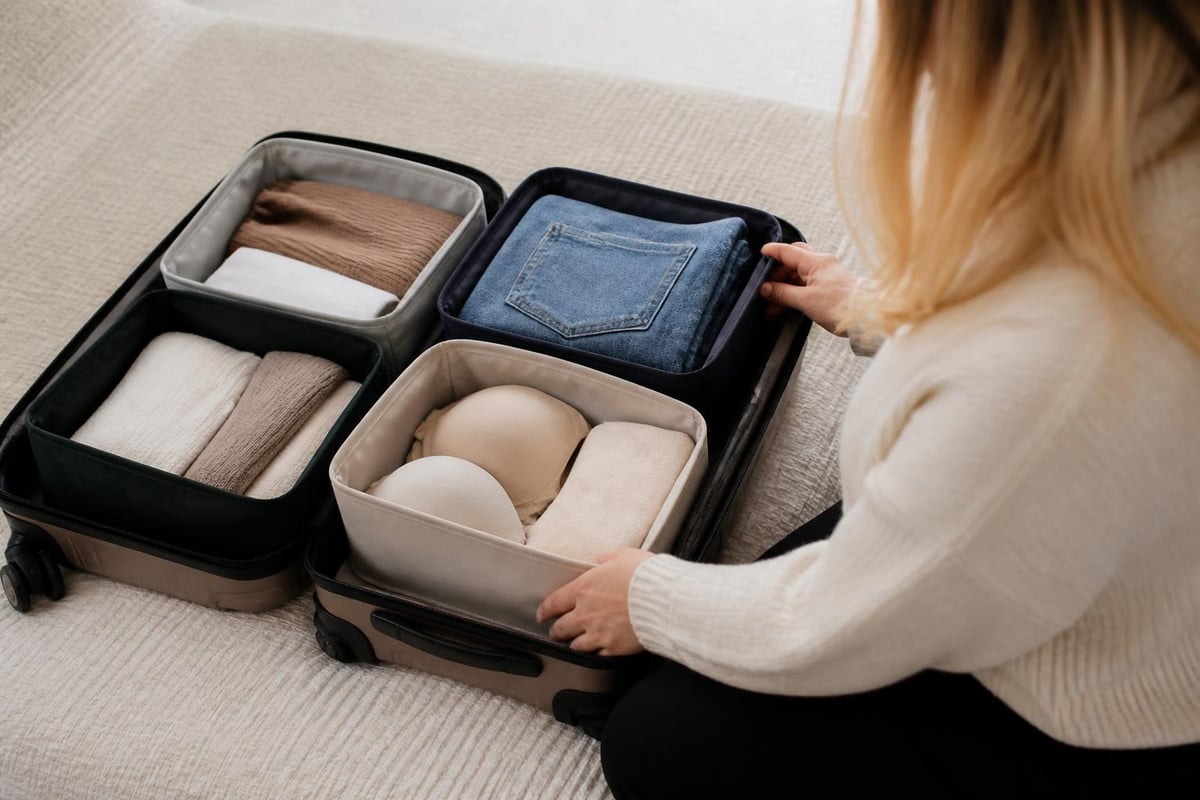
A simple 5-cube packing system works well for most week-long trips.
5-Cube Packing Cube System
Large Hoodie/Coat Cube
Use this for bulkier layers like hoodies, jumpers, sweaters, or light coats. It's designed to hold around 2–3 larger items, helping stop bulky clothing from taking over your suitcase.T-Shirt Cube
Pack your t-shirts, shirts, singlets, or light tops together. This cube can hold around 7–8 shirts, making it easy to keep everyday outfits in one place.Pants Cube
Use this for jeans, trousers, shorts, leggings, or skirts. It holds around 5–6 pairs, depending on fabric thickness.Underwear Cube
Keep underwear, bras, sleepwear, or smaller base layers together so they don't disappear into the corners of your bag.Socks Cube
Use this narrow cube for socks, but also for small extras like ties, scarves, or even belts if needed.
Once packed, place heavier cubes near the wheels of your suitcase and stack lighter cubes on top. Keep the cube you'll need first near the top, especially if you're arriving late or only opening your suitcase briefly.
Any small gaps around the cubes can still be useful for shoes, toiletry bags, chargers, or other travel accessories. This gives your suitcase a neater layout and helps you use the space more efficiently.
Beyond Travel: Other Ways To Use Packing Cubes
Packing cubes aren't just useful for suitcases. They can also help keep drawers, wardrobes, and seasonal clothing more organised at home.
In drawers, packing cubes create clear sections for underwear, socks, activewear, accessories, or kids' clothes. Instead of everything shifting around every time you open the drawer, each category stays in its own place.
They're also handy for seasonal storage. You can use larger cubes for jumpers, hoodies, thermals, or winter layers when they're not in regular rotation. Compression cubes are especially useful here because they help reduce bulk without needing a large storage box.
In wardrobes, packing cubes work well on shelves where folded clothes can quickly become messy. Instead of pulling one shirt out and disturbing the whole stack, you can slide out one cube, grab what you need, and put it back neatly.
Measuring Real-World Space Savings
How much space packing cubes save depends on how you use them, what you pack, and whether you're using standard or compression cubes.
In one packing comparison using the same clothing for a seven-day trip, the results looked like this:
Loose packing: 45 litres of suitcase space used
Rolling method: 38 litres used, saving 7 litres
Standard packing cubes: 36 litres used, saving 9 litres
Compression packing cubes: 30 litres used, saving 15 litres
The test used a standard 60-litre suitcase with typical travel clothing, including t-shirts, jeans, a jumper, underwear, and a few miscellaneous items. Results will vary depending on fabric thickness, suitcase shape, and packing technique.
The biggest everyday benefit isn't always the space saving, though. It's the organisation. In the same comparison, finding specific items was much faster with cubes than with loose packing.
Repacking is easier too. Instead of digging through your whole suitcase and refolding everything, you can return each item to its own cube. That helps stop your luggage becoming messier every time you move hotels, unpack quickly, or grab something in a hurry.
What Travellers Get Wrong
Packing cubes are simple, but they work best when you use them properly. If they didn't help on a past trip, one of these common mistakes may be the reason.
Overbuying cubes: You don't need eight cubes for a carry-on bag. Start with three or four and expand only if necessary. Excess cubes create clutter rather than organisation.
Choosing the wrong material: Very thin cubes may save a little weight, but they can wear out faster. Heavy-duty cubes can add unnecessary bulk. For most travellers, lightweight but durable nylon or polyester is the best middle ground.
Skipping the compression step: Compression cubes only work when you use both zippers. Leaving the compression zip undone wastes their primary advantage.
Mismatching cube and suitcase sizes: Cubes that are too large for your bag create awkward bulges. Cubes that are too small leave gaps everywhere. Measure first, buy second.
Evaluating Whether You Need Packing Cubes
Packing cubes are useful for most travellers, but the value depends on how often you travel, what you pack, and how organised you like to be.
How often you travel
If you travel regularly, packing cubes are more likely to be worth it. The time saved packing, unpacking, and finding things adds up quickly.
How long your trips are
For one-night or weekend trips, you may not need them. But for trips longer than four days, packing cubes can make your suitcase much easier to manage.
The type of luggage you use
Carry-on travellers, backpackers, and anyone trying to avoid checked baggage usually get the most benefit. If you're using a large suitcase with plenty of spare room, compression may matter less, but the organisation can still help.
Your packing style
If you already pack neatly, cubes make your system even easier to maintain. If you tend to throw everything in at the last minute, they can help create a bit more structure.
What you usually pack
Packing cubes work best with soft clothing like t-shirts, underwear, activewear, jumpers, and casual pants. Delicate fabrics like linen or structured items may need more careful packing.
Your budget
A good packing cube set is usually a small upfront cost, but it's more worthwhile if you'll use it often. For frequent travellers, the convenience alone can make them worth it.
At Simplify Living, our compression packing cubes are backed by a 14-day money-back guarantee, so you can test them with your own suitcase and see whether they suit the way you pack.
Related Packing Guides
For more on getting the most from your luggage space, see:
- Luggage Cubes for Packing: The Complete Guide — our full packing-cubes guide.
- Compression Packing Cubes: What They Are & How to Use Them — the dual-zip system explained.
- Compression Bags for Travel — vacuum and roll-up bags for maximum space saving.
- Are Packing Cubes Worth It? — who actually benefits.
Packing cubes do save space when used correctly with the right items, though the organisational benefits often matter more than raw compression. They work best for frequent travellers packing compressible fabrics on trips longer than a few days. For high-quality packing cubes designed to fit standard luggage dimensions, Simplify Living offers compression cube sets with fast shipping across Australia and a satisfaction guarantee that lets you try them on your next trip without risk.

Leave a comment
This site is protected by hCaptcha and the hCaptcha Privacy Policy and Terms of Service apply.