
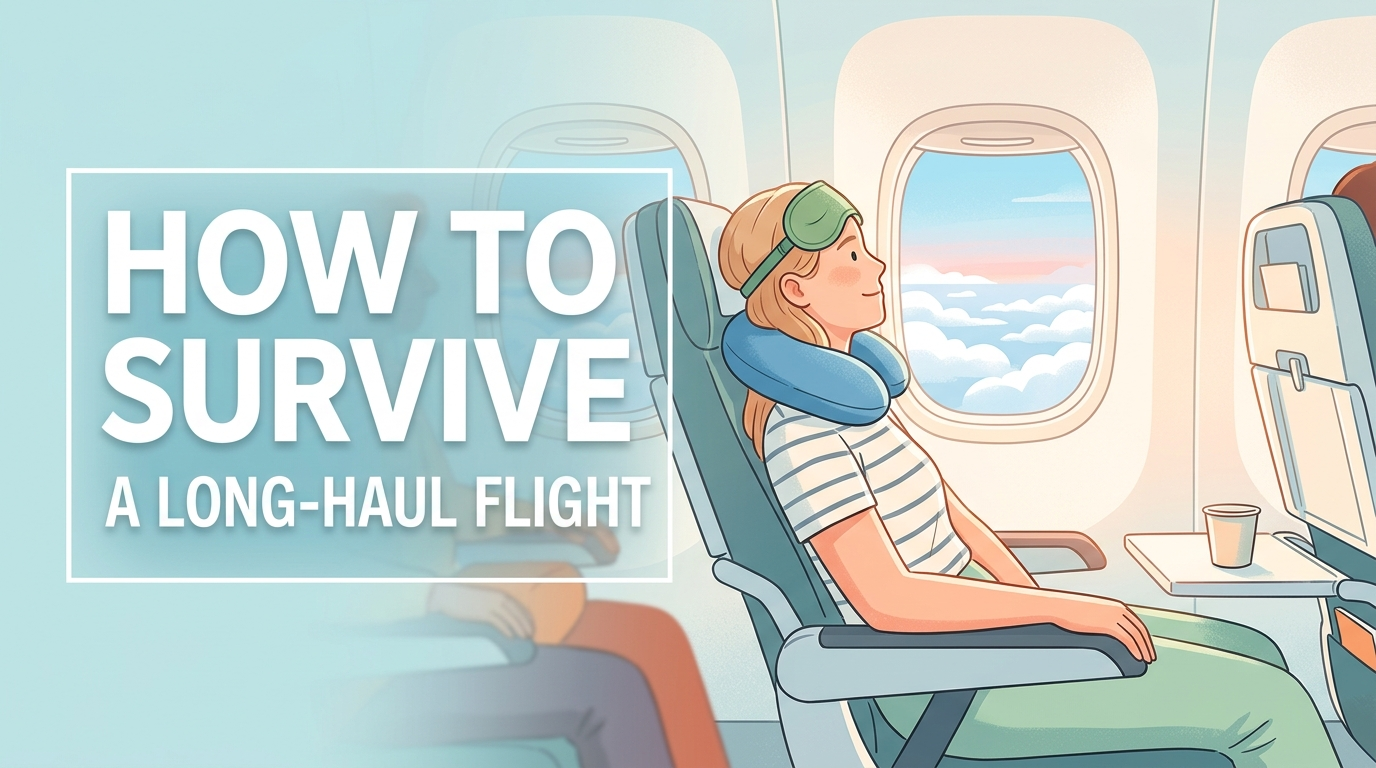
Surviving a long-haul flight comes down to a handful of habits, not luck: prepare your body before you board, protect your sleep, keep your blood moving, stay hydrated, and manage your body clock. Do those five things and a 14-hour flight in economy becomes genuinely bearable — you step off tired but functional, not wrecked. This guide is the practical playbook, built for the long routes Australians actually fly.
A long-haul flight (generally anything over six hours, and often 14+ from Australia) puts real strain on your body: dry air, cramped space, disrupted sleep, and hours of stillness. None of it is dangerous with a little know-how, but all of it is miserable if you wing it. Here's how to get it right, from the day before to touchdown.

Before You Fly: Set Yourself Up to Win
Half the battle is won before you reach the gate. A few simple choices in the 24 hours beforehand make the flight itself far easier.
Sleep well the night before. Boarding already exhausted makes everything harder. Bank good rest rather than pulling a pre-holiday all-nighter.
Choose your seat with intent. A window seat gives you something to lean on and control over the blind for sleeping; an aisle seat lets you get up to move without climbing over anyone. Pick the one that matches your priority — sleep or mobility.
Dress in comfortable layers. Cabin temperature swings wildly, so wear breathable layers you can add or shed. Loose clothing and slip-on shoes matter more than looking sharp.
Eat light before boarding. A heavy meal plus a pressurised cabin equals discomfort. Go lighter than you think you need.
Get your in-flight kit sorted before you fly, too. Knowing what genuinely helps saves you carrying dead weight — our guide to the best travel accessories for long flights covers the gear worth packing, and what to pack in your carry-on helps you build a personal comfort kit for under the seat.
How to Actually Sleep on a Long-Haul Flight
Sleep is the single biggest factor in how you feel on landing, and it's the hardest to get right in economy. The trick is to recreate as much of your normal sleep environment as you can.
Block out the cabin. Light and noise are the enemies of sleep, and you can't control either — so bring your own darkness and quiet. A contoured eye mask blocks light without pressing on your eyes, and noise-cancelling earplugs mute the engine drone and cabin chatter. The Memory Foam Travel Sleep Mask and a Noise-Cancelling Earplug Set are the two cheapest upgrades to your in-flight sleep, and they take up almost no room.
Support your head. The dreaded head-bob that jerks you awake comes from a lack of neck support. A proper neck pillow holds your head in place so you can actually drift off — the Snug™ Travel Pillow is designed to stop exactly that. A few more habits help: recline as soon as it's polite to, lean toward the window rather than the aisle, and buckle your seatbelt over your blanket so the crew don't need to wake you for checks.

Keep Your Blood Moving
Sitting still for hours is more than uncomfortable — it's the one genuine health issue on long flights. Staying immobile raises the risk of deep vein thrombosis (DVT), a blood clot that can form in the legs during long periods without movement. The good news is it's easily managed.
Walk the cabin every couple of hours. A short stroll to the galley and back gets your circulation going. Aisle seats make this effortless.
Do seated exercises. Ankle circles, calf raises, and knee lifts at your seat keep blood flowing when you can't get up.
Wear compression socks. They gently squeeze your lower legs to support circulation and prevent the swollen, heavy-legged feeling on landing. Put them on before you board, not mid-flight. Travel Compression Socks are one of the highest-value items you can pack for a long flight.
Stay hydrated (it helps here too). Well-hydrated blood flows more easily, so keep the water up throughout.

Beat the Dry Cabin: Hydration and Skin
Cabin humidity sits around 10–20%, far drier than almost anywhere on the ground. That's what leaves you with a parched throat, dry eyes, and tight skin. Fighting it is simple but needs to be deliberate.
Drink water steadily rather than waiting for the drink cart — the standard advice is roughly a cup for every hour in the air. The easiest way is to carry an empty bottle through security and fill it once you're airside; a collapsible water bottle packs flat and refills at the gate. Go easy on alcohol and coffee, which both dehydrate you and disrupt sleep. Beyond water, a little lip balm and moisturiser go a long way, and if your eyes dry out, saline drops help. Our guide on whether a collapsible water bottle is worth packing explains why it's a long-haul staple.
Manage Your Body Clock
The mental game matters as much as the physical one. As soon as you board, set your watch to your destination's time — it starts shifting your mindset to the new time zone before you land.
From there, work with the new clock: if it's night at your destination, try to sleep; if it's daytime there, stay awake and save your rest. Getting this right in the air is the first step in beating jet lag, and it makes the first day of your trip dramatically better. Our full guide on how to beat jet lag picks up exactly where this leaves off, covering what to do once you've landed.
Pass the Time Without Losing Your Mind
Even with perfect sleep, there are waking hours to fill. Boredom makes a flight feel twice as long, so plan for it.
Download everything before you fly. Streaming doesn't work at altitude and in-flight wifi is patchy and pricey, so load films, series, podcasts, and playlists onto your device in advance.
Bring an offline option. A book, an e-reader, or a downloaded game covers you when the seat-back screen or your battery gives out.
Keep a small comfort kit within reach. Lip balm, hand cream, a toothbrush, and a fresh pair of socks to change into mid-flight make you feel human again on a long leg.
Break the flight into chunks. Think of it as a meal, a film, a sleep, and another film rather than one endless block — it passes far faster.
Frequently Asked Questions
How do you survive a long-haul flight in economy?
Prepare before you fly (sleep well, dress in layers, choose your seat), protect your sleep with an eye mask, earplugs, and a neck pillow, keep your blood moving by walking every couple of hours and wearing compression socks, stay hydrated by drinking water steadily and going easy on alcohol, and set your watch to your destination to start adjusting your body clock. Those habits make economy genuinely manageable.
How can I sleep on a long-haul flight?
Recreate your normal sleep environment as much as possible: block light with a contoured eye mask, mute noise with earplugs, and support your head with a proper neck pillow to avoid the head-bob. A window seat gives you something to lean on, reclining and leaning toward the window helps, and buckling your seatbelt over your blanket means the crew won't wake you for checks.
What should I do to avoid DVT on a long flight?
Deep vein thrombosis risk rises during long periods of sitting still. To reduce it, walk the cabin every couple of hours, do seated exercises like ankle circles and calf raises, wear compression socks (put them on before boarding), and stay well hydrated so your blood flows more easily. If you have specific health concerns, check with your doctor before flying.
Should I drink alcohol on a long-haul flight?
It's best to go easy. Alcohol dehydrates you in an already very dry cabin and disrupts the quality of your sleep, so while a drink is fine, several will leave you feeling worse on landing. Prioritise water instead — roughly a cup for every hour in the air — and keep coffee moderate for the same reasons.
What is considered a long-haul flight?
A long-haul flight is generally any flight over six hours, though from Australia many international routes run 14 hours or more, which are sometimes called ultra-long-haul. The longer the flight, the more the habits in this guide matter — sleep, movement, and hydration make the biggest difference on the longest legs.
Land Feeling Human
A long-haul flight doesn't have to leave you a wreck. Prepare your body beforehand, protect your sleep, keep moving, drink water, and start living on destination time the moment you board — and you'll walk off the plane tired but ready, instead of needing a day to recover. The habits are simple; the difference they make is enormous.
Give yourself the best shot at arriving fresh — the First Class Comfort Bundle brings together the sleep and comfort essentials that make economy feel a lot closer to business, backed by our 2-year warranty, 30-day money-back guarantee, and free shipping, from a proudly Aussie-owned team trusted by over 300,000 travellers. Explore the full travel accessories range to build your long-haul kit.

Leave a comment
This site is protected by hCaptcha and the hCaptcha Privacy Policy and Terms of Service apply.