
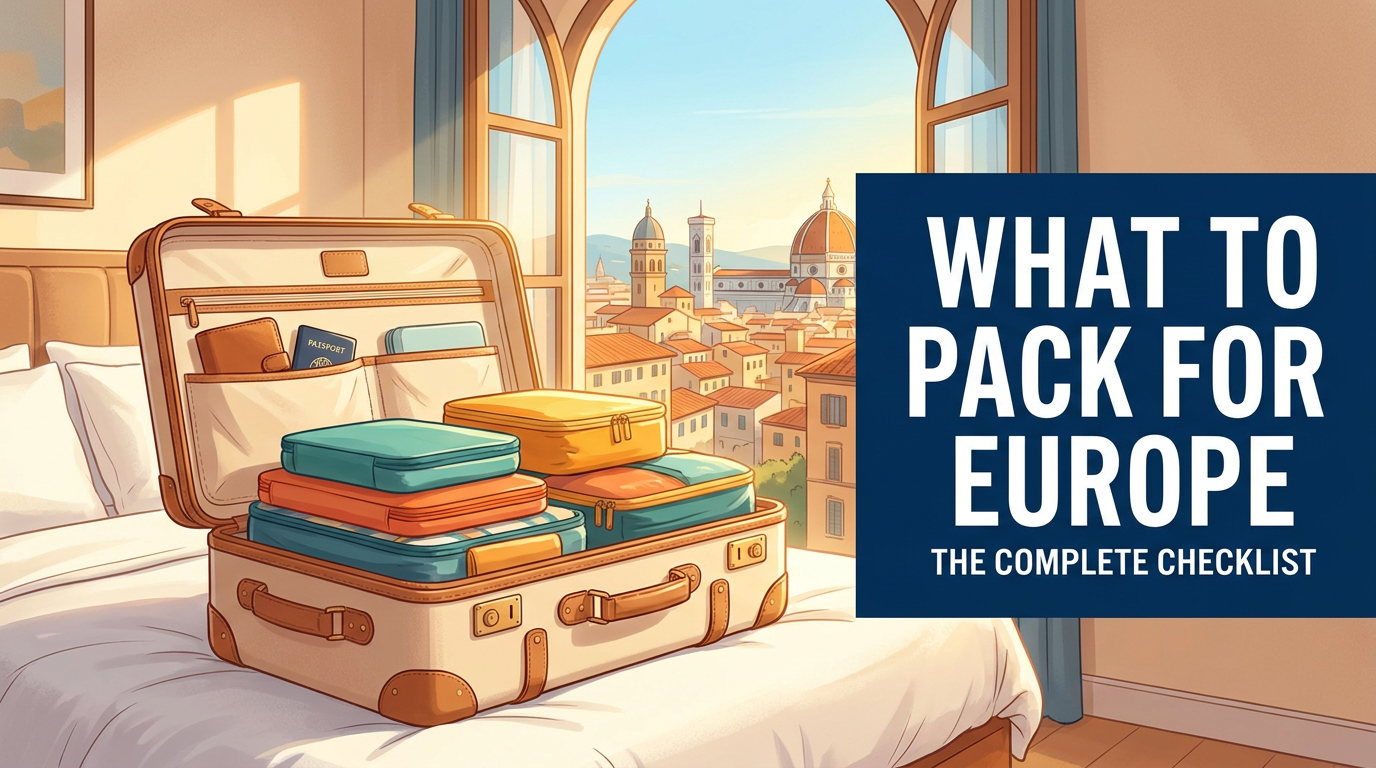
What to Pack for a Trip to Europe: The Complete Checklist
Packing for a Europe trip is one of those tasks that feels overwhelming until you have a system. The challenge isn't knowing what to bring — it's knowing what to leave behind. Europe rewards light packers: cobblestone streets, crowded trains, and budget carry-on limits all punish overstuffed bags. This guide walks you through everything you need, category by category, so you can pack with confidence and arrive without the chaos.
Quick summary: Pack versatile clothing for the climate you're visiting, cover your documents and valuables with RFID protection, and use compression packing cubes to fit more into less space. Keep your day-bag lightweight and anti-theft ready — European cities are beautiful, but pickpockets are real.
1. Documents & Travel Essentials
Your documents are the foundation of your trip — lose them and everything stops. Get this category sorted first.
- Passport (valid for at least 6 months beyond your travel dates)
- Travel insurance policy documents (printed or saved offline)
- Flight and accommodation confirmations
- European Health Insurance Card (EHIC) if applicable
- Any required visas — check requirements by nationality well in advance
- Emergency contact list (written down, not just on your phone)
ETIAS for 2026: If you're travelling to Schengen countries, check whether ETIAS (European Travel Information and Authorisation System) applies to your passport. Registration requirements vary by nationality.
A dedicated travel wallet keeps everything in one place and removes the daily stress of locating documents at check-in counters and border crossings. Our RFID Passport Wallet holds your passport, boarding passes, and cards in one slim, RFID-blocking wallet — so you're not fumbling through your bag at every gate.

- Notify your bank before departure to avoid card blocks
- Carry some local cash for markets, smaller towns, and transport
- Keep a backup card in a separate location from your main wallet
2. Clothing & Footwear
The biggest packing mistake travellers make for Europe is bringing too much. A two-week trip does not require 14 outfits.
The golden rule: Pack for 5–7 days, plan to do laundry once. Most European accommodation has laundry access, and lightweight merino wool or quick-dry fabrics refresh easily after a rinse.
- 4–5 tops (mix of casual and one slightly smarter option for nicer restaurants)
- 2–3 bottoms (jeans/trousers that can dress up or down, plus shorts in summer)
- 1 light layer — a packable jacket or cardigan works for most seasons
- 1 warmer layer if travelling in shoulder season or cooler regions
- Comfortable walking shoes — break them in at home. New shoes on cobblestones are a trip-ruiner.
- 1 versatile second shoe option (smart casual flats or low trainers)
- Underwear and socks (7 pairs each)
- Light sleepwear
Seasonal notes:
- Summer (June–August): Lightweight, breathable fabrics. A light scarf is useful for church and mosque entry.
- Shoulder season (April–May, September–October): Layer up. Evening temperatures can drop significantly.
- Winter (November–March): A proper coat, thermal underlayers, and waterproof footwear. Pack light elsewhere to compensate.
3. Packing Organisation
How you pack matters as much as what you pack. Throwing everything into a suitcase means spending every morning digging for a clean shirt at the bottom of a pile.

Compression packing cubes are the single best upgrade you can make to your packing system. Each cube is dedicated to a clothing category — tops in one, bottoms in another, underwear and socks in smaller cubes — so everything has a place and you can find anything immediately. The compression zip removes excess air, fitting significantly more into your suitcase than loose packing allows.
Our Compression Packing Cubes set includes five cubes, each sized for a specific clothing type. Over 300,000 travellers use them as their go-to packing system. They're particularly useful for Europe trips where you're moving between multiple cities and living out of a suitcase.
- Compression packing cubes for clothing
- A separate toiletries bag (leak-proof, airport security compliant)
- A packing list reviewed 48 hours before departure
- Luggage tag on both your suitcase and carry-on
4. Day Bag & Security
This is the category most travellers underestimate — and where things go wrong. Paris, Rome, Barcelona, and Amsterdam are among the world's pickpocket hotspots. Crowded markets, metro trains, and tourist queues are where most incidents happen.

A well-chosen day bag does three things: keeps your valuables secure, stays comfortable over a full day of walking, and doesn't slow you down. Anti-theft crossbody bags are worth the investment for European travel — hidden pockets, secure zips, and RFID-blocking lining mean your cards and passport details stay protected even in crowded spaces.
Our Anti-Theft Crossbody Charging Bag adds a USB charging port so you can keep your phone charged from a power bank inside the bag — genuinely useful when you're navigating with maps all day.
- Anti-theft crossbody or shoulder bag
- Portable power bank (10,000–20,000mAh)
- Reusable water bottle
- Sunscreen and sunglasses
- Small first aid kit (plasters, pain relief, blister pads)
- Snacks for long museum visits or train journeys
5. Electronics & Adapters
Europe uses Type C, E, and F plugs — none compatible with Australian or US plugs without an adapter. A universal travel adapter is essential, not optional.
- Universal travel adapter (covers all European plug types)
- Phone charger and cable
- Portable power bank (must travel in carry-on — not checked luggage)
- Laptop or tablet if genuinely needed
- Earphones or noise-cancelling headphones
- Camera if you prefer shooting beyond a phone
6. Toiletries
Keep this category as light as possible. Most European hotels provide basics, and pharmacies are easy to find in any city.
- Shampoo, conditioner, body wash (max 100ml per container for carry-on)
- Toothbrush, toothpaste, dental floss
- Deodorant
- Skincare essentials (minimal)
- Sunscreen
- Prescription medications in original packaging
- Pain relief, antihistamines, anti-nausea tablets
- Blister plasters — pack more than you think you'll need
7. What NOT to Pack for Europe
- More than 2 pairs of shoes — they are the heaviest, bulkiest items in any bag
- Full-size toiletries — you can buy everything you need across Europe
- A different outfit for every day — mix-and-match packing is far more efficient
- Your entire tech setup — if you can do it on your phone, leave the laptop at home
- Valuable jewellery — leave anything you'd be devastated to lose
- Hair dryers or straighteners — every hotel has them, and they take up space
Frequently Asked Questions
What documents do I need to travel to Europe?
A valid passport is essential — valid for at least 6 months beyond your return date. Depending on your nationality, you may also need a Schengen visa or ETIAS travel authorisation. Travel insurance is mandatory for some Schengen entries and strongly recommended for all European travel.
How many outfits should I pack for 2 weeks in Europe?
Plan for 5–7 days of clothing and do laundry once midway through. Choose versatile pieces that mix and match, and prioritise comfort over variety.
Do I need an adapter for Europe?
Yes. A universal travel adapter covering Type C, E, and F European sockets is essential. Buy one before you leave — airport versions are significantly overpriced.
Is Europe safe for solo travellers?
Europe is generally very safe. The main practical risk is petty theft — pickpocketing — particularly in major tourist cities and on public transport. An anti-theft bag with concealed zips and RFID blocking significantly reduces this risk.
What is the best bag for exploring European cities?
A lightweight anti-theft crossbody bag is ideal for day trips. It keeps your hands free, sits close to your body, and — if it has RFID-blocking and concealed zip features — keeps your cards and documents protected in crowded spaces. Explore our anti-theft bag range for options suited to every travel style.
Should I pack packing cubes for Europe?
Yes — especially if you're visiting multiple cities and moving hotels regularly. Compression packing cubes keep your clothes organised, reduce wrinkles, and let you find anything instantly without unpacking everything. See our full range of packing cubes.
Ready to pack smarter for Europe? Start with the right gear — our Compression Packing Cubes and anti-theft travel bags are built for exactly this kind of trip. Loved by 300,000+ travellers, backed by a 2-year warranty, and shipped free.
Written by the Simplify Living Team

Leave a comment
This site is protected by hCaptcha and the hCaptcha Privacy Policy and Terms of Service apply.